

Lesson 2: Learning “El Derecho de Vivir en Paz”
Aim: How are rhythms and instruments used in Chilean folk music?
Summary: Students will explore the rhythms and instruments in “El Derecho de Vivir en Paz,” and learn about the song’s message of peace and its importance in Chilean culture.
Materials: Musical Explorers digital resources, Musical Explorers Student Guide
Standards: National 1, 2, 4, 10, 11; NYC 1, 2, 3, 4
Vocabulary: bombo legüero
“El Derecho de Vivir en Paz” (“The Right to Live in Peace”) is a famous Chilean song by Víctor Jara. He wrote it to share a message of peace, kindness, and fairness for all people. The song has become an important symbol of hope and unity in Chile and around the world. Its gentle melody and powerful words remind us that everyone deserves to live in a world filled with peace and respect.
“El Derecho de Vivir en Paz”
Text
El derecho de vivir
Poeta Ho Chi Mi
Que golpea de Vietnam
A toda la humanidad
Ningún cañón borrará
El surco de tu arrozal
El derecho de vivir en paz
Indochina es el lugar
Más allá del ancho mar
Donde revientan la flor
Con respeto a todas las vidas
La luna es una explosión
Que funde todo el clamor
El derecho de vivir en paz
Tío Ho, nuestra canción
Es fuego de puro amor
Es palomo palomar
Olivo del olivar
Es el canto universal
Cadena que hará triunfar
El derecho de vivir en paz
El derecho de vivir en paz
El derecho de vivir en paz
Coro Melody:
La, la, la …
(x8)
El derecho de vivir en paz
Lyrics and music by Víctor Jara (1971)
“The Right to Live in Peace”
Translation
The right to live,
poet Ho Chi Minh,
strikes out from Vietnam
to all the human race.
No gun will wipe out
the furrow of your rice-field
the right to live in peace.
Indo-China is the place
on the far side of the wide sea
where they blow up flowers
with genocide and napalm.*
The moon is an explosion
which fuses all the outcry—
The right to live in peace.
Uncle Ho, our song
is the fire of pure love,
dove of the dovecote,
olive of the olive tree.
It is the universal song—
A chain which will bring victory to
a right to live in peace.
a right to live in peace.
a right to live in peace.
The right to live in peace
Translation and introduction
from Victor Jara. His life and
songs. London: Essex Music
International Limited, 1976.
Translations by Joan Jara,
Alastair Reid, and
Adrian Mitchell.
*This authorized
translation reflects the
original words of the
song. Claudia has
altered the lyrics to say,
"With respect for all life."
Explore Chilean Instruments
- The instruments used in Chilean folk traditions play an essential role in creating the rich, vibrant rhythms and melodies.
- Explore the instruments using Chilean Instruments (PDF).
- Discuss each instrument and how it contributes to the whole ensemble.
- How would you describe the sound of each instrument?
- How are these instruments similar? How are they different?
- Using the three instrument demonstrations, see if students can identify each instrument and then practice clapping or tapping the rhythms together.
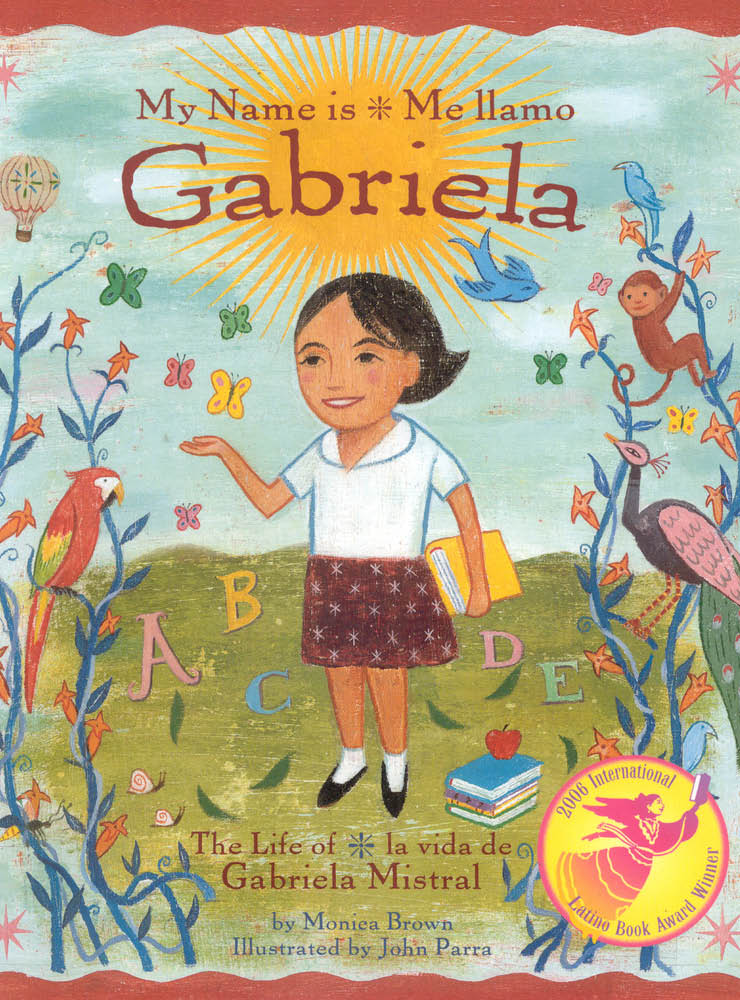
My Name is Gabriela / Me Llamo Gabriela
This biography tells the story of Gabriela Mistral, a woman born in Chile who had a deep passion for language, poetry, and storytelling. Her remarkable talents and contributions to literature eventually led her to become the first Latin American woman ever to receive the prestigious Nobel Prize in Literature.
Musical Word Wall
Add the words bombo legüero to the Musical Word Wall.
Share Your Feedback
Help us improve the Musical Explorers experience by sharing your feedback in a five-minute survey.
Image Credits
Claudia by Hollis King; Background view of the watchtower of the Universidad de Concepcion, Chile by Christian Creixell / Alamy Stock Photo; Traditional homemade humitas of corn by Zoonar GmbH / Alamy Stock Photo; Claudia performance photo by Tracy Yarde.