

Lesson 2: Learning “Pesah a la Mano”
Aim: How do music and food help us celebrate family traditions?
Summary: Students learn to sing “Pesah a la Mano,” explore cultural traditions, and discover a Ladino instrument.
Materials: Musical Explorers digital resources, Musical Explorers Student Guide
Standards: National 1, 2, 4, 5, 10, 11; NYC 1, 2, 3, 4
Vocabulary: bouzouki, ritual
“Pesah a la Mano” is a joyful Ladino song by Flory Jagoda that celebrates the transition from the Purim holiday to the Passover holiday. Both Purim and Passover are holidays where families gather to share food, stories, and traditions. This song reflects the excitement of preparing for Passover—cleaning the house, wrapping grape leaves, and putting away the leavened bread for the eight days of the holiday. As part of a repertoire of songs for life’s rituals—birth, marriage, holidays, and more—it connects generations through music. The lyrics highlight festive foods and the spirit of togetherness, blending cultural traditions from across Sephardi history.
“Pesah a la Mano”
Text
Purim, Purim, Purim lano
Pesah, Pesah a la mano
Las matsas si stan faziendo
Los japrakis si stan kozyendo
Refrain:
Aman, aman*
Aman, aman*
El Diyo bendicho
Mos da mazal
(x4)
Purim, Purim, Purim lano
Pesah, Pesah a la mano
La nona sta diziendo a los niyetos
Alimpiya il puelvo kantones i los techos
(Refrain)
(x6)
Purim, Purim, Purim lano
Pesah, Pesah a la mano
Il Sinyor Rubi disho a las tiyas
No komer pan por ocho diyas
(Refrain)
(x4)
*This phrase has no literal meaning and
is simply an expressive phrase used in song.
“Passover is at Hand”
Translation
Purim is over,
Passover is at hand
Matzahs are being made
Grape leaves are being rolled
Refrain:
Aman, aman
Aman, aman
God blesses us
And gives us luck
(x4)
Purim is over,
Passover is at hand
Grandmother is saying to her grandchildren
Clean the floor, the corners, and the ceiling
(Refrain)
(x6)
Purim is over,
Passover is at hand
The rabbi tells the aunts
Don’t eat bread for eight days!
(Refrain)
(x4)
Explore the Bouzouki in “Pesah a la Mano”
- The bouzouki is a string instrument, like a guitar or mandolin, with a round body and a long neck.
- It has metal strings that can be plucked or strummed. It has been played for many years by Sephardi people to bring people together at celebrations, dances, and special events!
- The bouzouki, a long-necked plucked lute, has both Greek and Turkish roots. Its name stems from the Turkish word “bozuk,” meaning “broken” or “modified.” It evolved from the Turkish saz, and was traditionally used for dancing and entertainment in Greece.
- Use Explore the Bouzouki (PDF) and Bouzouki demonstration and Fiddle demonstration to learn to identify the instruments.
Community Celebration
- As a class, discuss the special ways families and communities prepare for big holidays or celebrations.
- What are some occasions in your family or community where music, dance, and food play a big role in the celebration: for example, a birthday or holiday?
- Why is this celebration important?
- What is your favorite part of the celebration?
- What kinds of food do you eat?
- Who do you spend it with?
- What rituals are a part of preparing for this celebration: e.g., decorating together or preparing a special meal?
- Have your students draw a picture of this celebration honoring the traditions in their own community.
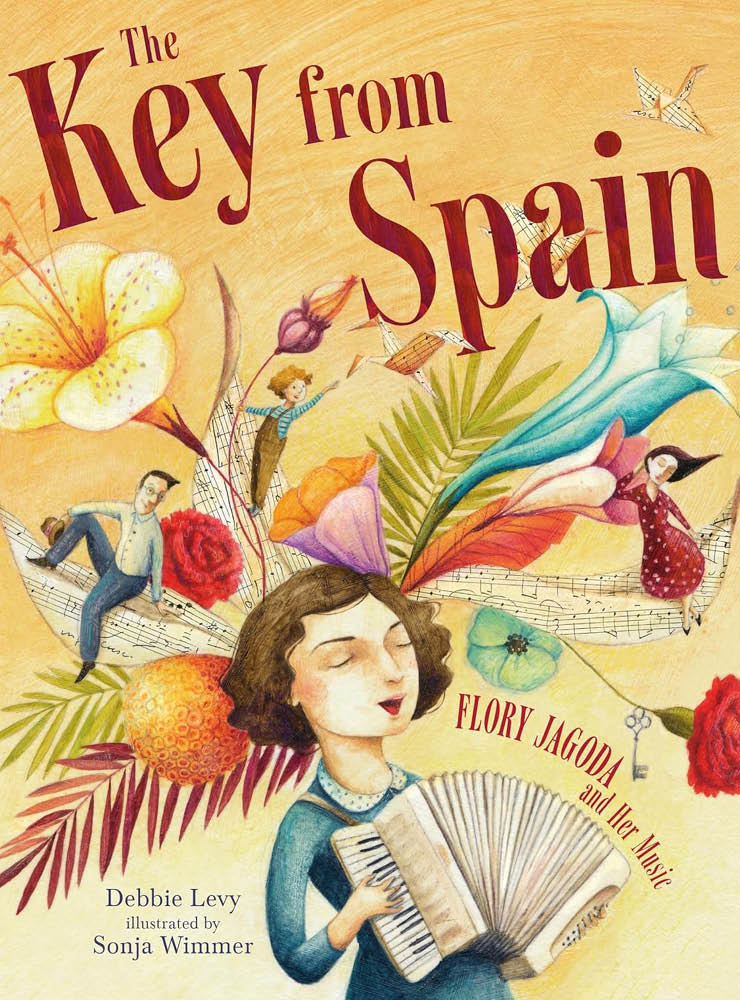
The Key from Spain: Flory Jagoda and Her Music
The Key from Spain: Flory Jagoda and Her Music by Debbie Levy with illustrations by Sonja Wimmer tells the story of Flory Jagoda, a Sephardic Jewish musician who kept the traditions of her ancestors alive. After her family was forced to leave Spain during the Inquisition, they brought their language, Ladino, and a special key from their old home. Centuries later, Flory fled Europe during World War II and brought her music to the US, sharing the songs and stories of her heritage.
Musical Word Wall
Add the words bouzouki and ritual to the Musical Word Wall.
Share Your Feedback
Help us improve the Musical Explorers experience by sharing your feedback in a five-minute survey.
Image Credits
Lily by Ally Schmaling; Panoramic view of Mediterranean coast of Turkey, town of Kas and Greek island of Kastellorizo in distance by DPK-Photo / Alamy Stock Photo; Borek (Also Burek) a Turkish pastry filled with cheese or potato or mushroom with black olives by PhotoStock-Israel / Alamy Stock Photo; Lily childhood photo courtesy of artist.