

Lesson 2: Learning “Ola de la Mar”
Aim: What elements make up a plena song?
Summary: Students will explore the rhythms and instruments used in a plena song, and learn about the social context of plena music.
Materials: Musical Explorers digital resources, Musical Explorers Student Guide, classroom instruments.
Standards: National 1, 2, 3, 5, 10, 11; NYC 1, 2, 3, 4
Vocabulary: güícharo, pandereta, plena, rhythmic layers, seguidor, segundo, requinto
Plena originated among urban workers of Puerto Rico’s coastal areas, mainly in Ponce and Mayagüez, shortly after Spain lost political control of the island, and thus during the early period of US colonial rule. Like bomba, plena is sung in a call-and-response style. In plena, the singer, rather than the dancer and drummer, does the improvising. Lyrics are often inspired by current events. Thus, plena has sometimes been called “el periódico cantado” (“the sung newspaper”). More broadly, the songs relay oral history and reflect the singer’s own perspectives, beliefs, hopes, and feelings.
“Ola de la Mar”
Text
Chorus:
Ola de la mar, ola de la mar
Tráigame la paz,
Tráigame la paz que mi plena va a sonar
(x2)
Entre ola y ola, entre ola y ola
Mi plena va sonar
Ola de la mar, tráigame la paz
Tráigame la paz que mi plena va a sonar
(Chorus)
Siempre cuento contigo,
siempre cuento contigo
A la hora de la verdad
Cuando tengo tristeza o si no felicidad.
Cuando tengo tristeza o si no felicidad.
(Chorus)
Saquen los panderos, saquen los panderos
Y vamos a tocar
Ola de la mar tráigame la paz
Tráigame la paz que mi plena va a sonar.
(Chorus)
Siempre que oigo la plena,
siempre que oigo la plena
Me dan ganas de bailar
Ola de la mar tráigame la paz
Tráigame la paz que mi plena va a sonar.
(Chorus)
(x2)
Translation
Chorus:
Wave of the sea, wave of the sea
Bring me peace,
Bring me peace that my plena will sound
(x2)
In between the waves, in between the waves
My plena will start to ring
Wave of the sea, bring me peace
Bring me peace that my plena will sound
(Chorus)
I always count on you,
I always count on you
At the moment of truth
When I am sad or when I am happy
When I am sad or when I am happy
(Chorus)
Take out the panderos, take out the panderos
And we will begin to play
Wave of the ocean bring me peace
Bring me peace that my plena will sound.
(Chorus)
Every time I hear the plena,
every time I hear the plena
I feel like dancing
Wave of the ocean bring me peace
Bring me peace that my plena will sound.
(Chorus)
(x2)
- Using the Panderetas layer 1 seguidor audio track, Panderetas layer 2 segundo audio track, and Panderetas layer 3 güícharo audio track, listen to the three different layers separately, and hear how they come together.
- Using classroom instruments or body percussion, have your students try out each of the rhythms. If they are ready, try layering two or even three of the rhythms together.
- Explain that the smaller pandereta, called the requinto, improvises over the foundational rhythm.
- Demonstrate how the requinto would improvise over one or more of the foundational rhythms.
- As your students get comfortable, have them take turns playing the requinto and improvising while the rest of the class maintains the base rhythm.
- For an added challenge, try adding the chorus to “Ola de la Mar” to the rhythmic layers. You can sing the call, while your students sing the response.
Compare and Contrast Bomba and Plena Instruments
- The instruments played in bomba and plena are distinct for each genre.
- Explore each set of instruments using Bomb and Plena Instruments (PDF).
- Discuss the similarities and differences between the two sets, focusing in particular on the differences between the two sets of drums. Using some of the listening examples found under Resources for Teachers, see if your students can identify whether the sample is bomba or plena, based on the instruments.
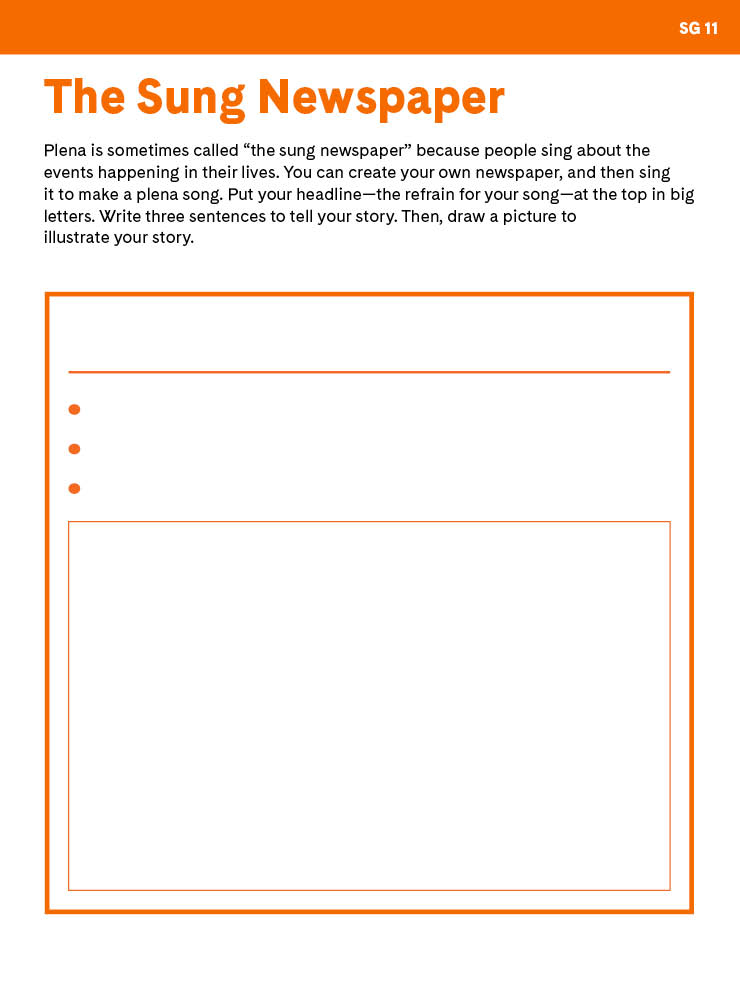
The Sung Newspaper
- Plena music is sometimes referred to as “the sung newspaper,” because singers improvise lyrics about current events or their own personal experiences, punctuated by an established refrain.
- In this activity, your students will create their own plena song using The Sung Newspaper (PDF).
- As a class, decide on a subject for your plena song.
- What is an important event that you’d like to tell the world about? Is it something in the news, something that happened in school, or something in your own life?
- If you were writing a story about that event in a newspaper, what would the headline be? The headline will be just a few words, and will become the refrain of the plena song.
- Using The Sung Newspaper (PDF), students can create their own “sung newspaper” by filling in the headline, writing a short story, and then illustrating their story.
- Work with the class to create a chant or melody for the headline. Start with the rhythm of the words and then add pitches if desired, using classroom instruments as available. To establish the underlying rhythm for the chant you can use the Panderetas layer 1 seguidor audio track, Panderetas layer 2 segundo audio track, and Panderetas layer 3 güícharo audio track.
- If your students are ready, you can complete your plena song by adding an improvised response to the refrain: A student can read or chant a line or phrase from their story, and the rest of the class will respond with the headline refrain.
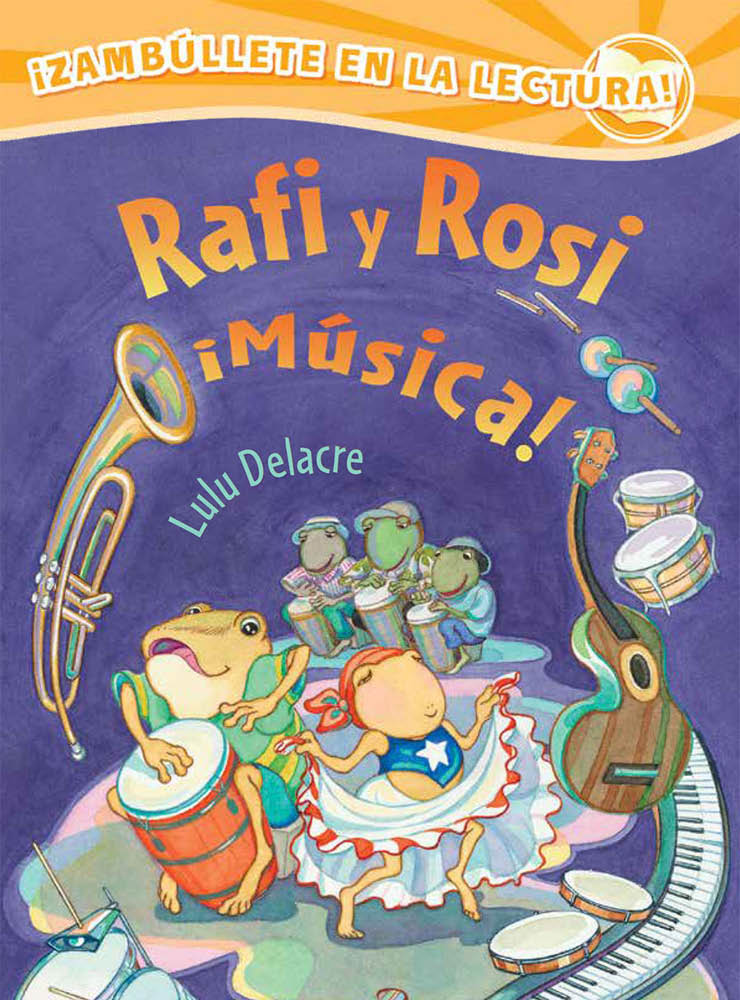
Rafi y Rosi ¡Música!
Rafi and his younger sister, Rosi, are bursting with excitement as they dive into the rich, traditional music of their native Puerto Rico. They pound out vibrant rhythms on bomba drums and twirl to the pulsing, rippling beats. With plena, they lift their voices in song and move their bodies to the lively, storytelling melodies. At a festive celebration, they eat savory paella and crispy, golden corn fritters, all while dancing with joyful abandon to the fiery, infectious rhythms of la salsa!
Musical Word Wall
Add the words güícharo, pandereta, plena, requinto, rhythmic layers, seguidor, and segundo to the Musical Word Wall.
Share Your Feedback
Help us improve the Musical Explorers experience by sharing your feedback in a five-minute survey.
Image Credits
Julia Gutiérrez-Rivera and Juan Gutiérrez by Andres Rodriguez; Car photo by Lee Kowarski is licensed by CC BY 2.0. SG 9: Juan childhood photo courtesy of artist; Julia childhood photo courtesy of artist; Puerto Rican Day Parade by Boss Tweed is licensed by CC BY 2.0; San Juan photo by Erik Larson. SG 10: Barriles, maracas, and panderetas by Division of Home and Community Life, National Museum of American History, Smithsonian Institution; cua sticks by Uryah and Chris Down/Asenine; güiro by Miguel Andrade.