

Lesson 2: Learning “Boland Baalaa”
Aim: How does music express and embody longing, joy, and community through rhythm and movement?
Summary: Students will learn to sing “Boland baalaa,” dance the choub bazi, and create their own movements to express the rhythm and energy of the dance.
Materials: Musical Explorers digital resources, Musical Explorers Student Guide, sticks
Standards: National 1, 2, 4, 5, 10, 11 ; NYC 1, 2, 3, 4
Vocabulary: Raghs-e Choub
“Boland baalaa” (meaning “Tall and Pretty”) is a song from the Khorasan region in northeastern Iran. The song refers to the experience and feelings of being far away from a loved one, and the words “boland baalaa” make us think about being far in distance or feeling distant inside while showing how much someone can care for another person.
“Boland Baalaa”
Text
Boland baalaa be baalaat maandayom mo,
Boland baalaa be baalaat maandayom mo
Baghal vaa kon ke sarmaa khordayom mo
Chorus:
Aziz jaan, Jigar jaan
Del ey del ey del ey del, Aay del ey del ey del ey del
Del ey del ey del ey del, Aay del ey del ey del ey del
Baghal vaa kon mo re konje baghal gir
Baghal vaa kon mo re konje baghal gir
Ke disho dar biyaabaan maandayom mo,
ke sarmaa khordayom mo
(Chorus)
Labe baam aamadi kardi eshaara,
Labe baam aamadi kardi eshaara
Hamaan dam dele maa shod paara paara,
(Chorus)
Baraaye jang baa khodaa lashkar biyaarom,
baraaye jang baa khodaa lashkar biyaarom
Agar dar aasemaan gardi setaara
(Chorus)
(x2)
“Tall and Pretty”
Translation
Tall and pretty! I’m left in awe by your height
Tall and pretty! I’m left in awe by your height
Open your arms because I’ve caught a cold
Chorus:
My dear, my love
My heart, my heart, my heart, my heart, my heart,
my heart, my heart, my heart
Open your arms, hold me tight
Open your arms, hold me tight
Since I’ve stayed in the desert last night,
Since I’ve got a cold
(Chorus)
You reached the rooftop and gave a signal.
You reached the rooftop and gave a signal.
Right at that moment, my heart broke into pieces.
(Chorus)
I will bring an army to fight with God
I will bring an army to fight with God
If you become a star in the sky
(Chorus)
(x2)
Learn the Raghs-e Choub in “Boland Baalaa”
- Raghs-e choub is a lively traditional Iranian dance from Gilan, where dancers hold wooden sticks (choub) and move in coordinated steps, often in circles or patterns, while striking the sticks together rhythmically. It is energetic, joyful, and reflects the communal spirit, usually performed at festivals and celebrations.
- Refer to the learning video to learn the dance movements.
- What objects can you find in your school or at home that can be used as instruments? Refer to Discover Music in Everyday Objects (PDF).
- Begin by practicing the basic steps, focusing on rhythm and coordination. The movements are lively and involve quick steps, often in circles or patterns.
- Grip the wooden sticks (choub) firmly in each hand. The sticks should be held comfortably, with your arms relaxed but ready for rhythmic movement.
- As you move, practice striking the sticks together in time with the music, creating a rhythmic sound. Focus on making the strikes clear and in sync with the footwork.
- Work on syncing your foot movements with the stick strikes, creating a smooth flow.
- Once comfortable with the basic movements, practice with others in a circle or other patterns. The group’s movements should be synchronized, with everyone following the same rhythm and stick strikes.
- After learning the movements, students can add their own unique style by incorporating personal foot movements, arm gestures, or body expressions that feel natural to them while still maintaining the rhythm.
- Finally, practice the dance while listening along to “Boland Baalaa” to get the feel of the rhythm and tempo.
Identifying Emotions in Music
- As a class, discuss the different ways that music can express complex human emotions such as longing, love, distance, and separation.
- How do different musical traditions, like Iranian folk music, capture and communicate these feelings?
- What emotions are sparked by music, dance, and community, and why are these connections important?
- Finally, what is your favorite part about using music to express and share emotions?
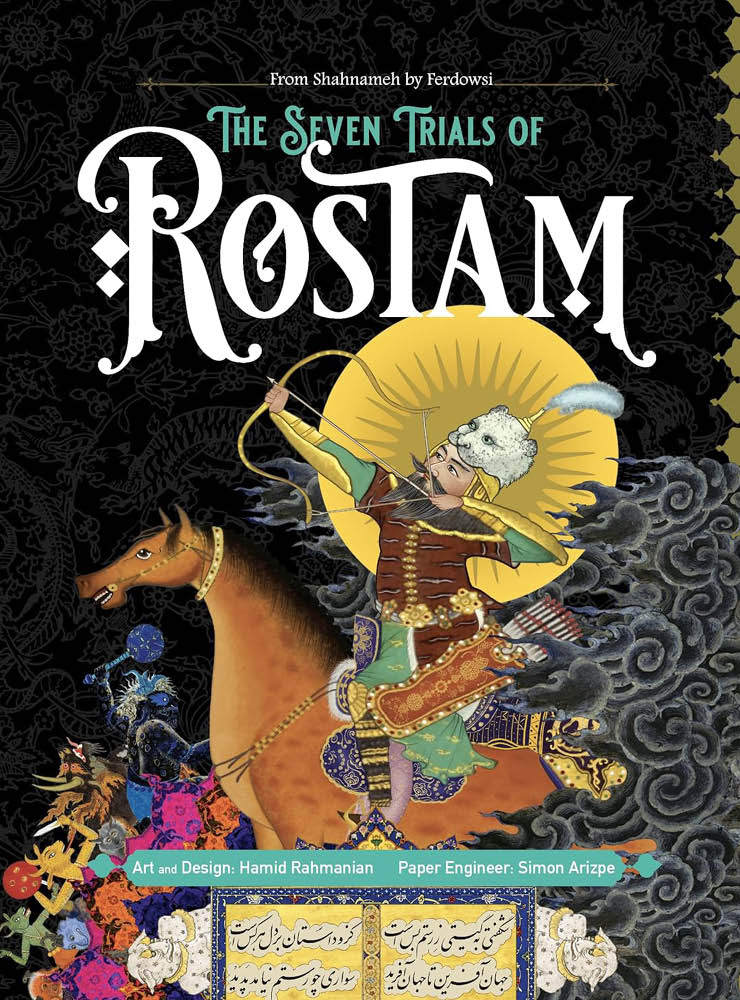
The Seven Trials of Rostam
When the Persian king Kay Kavous invades the enchanted land of Mazandaran, guarded by powerful demons, he and his army are swiftly defeated and imprisoned by the dreaded White Demon. Only one warrior can save them—Rostam.
With his loyal horse Rakhsh, Rostam embarks on a perilous journey, facing seven heroic trials—battling wild beasts, demons, and witches—to rescue the king and defend Iran. Through these trials, he earns his place as the greatest hero the world has ever known.
Musical Word Wall
Add the words Raghs-e Choub to the Musical Word Wall.
Share Your Feedback
Help us improve the Musical Explorers experience by sharing your feedback in a five-minute survey.
Image Credits
Mehrnam photo by Natalie Chitwood; Golpayegan Friday Mosque was built in the 12th century during the Great Seljuk period. The mosque was built by Seljuk Sultan Muhammet Tapar. Iran by Ahmet Kuş / Alamy Stock Photo.; Grilled koobideh with vegetables and flat bread by Zoonar GmbH / Alamy Stock Photo; Mehrnam childhood photo courtesy of artist.